Understanding Numerical Learning: A Gateway to Advanced Mathematical Solutions

Understanding Numerical Learning: A Gateway to Advanced Mathematical Solutions

What is Numerical Learning?

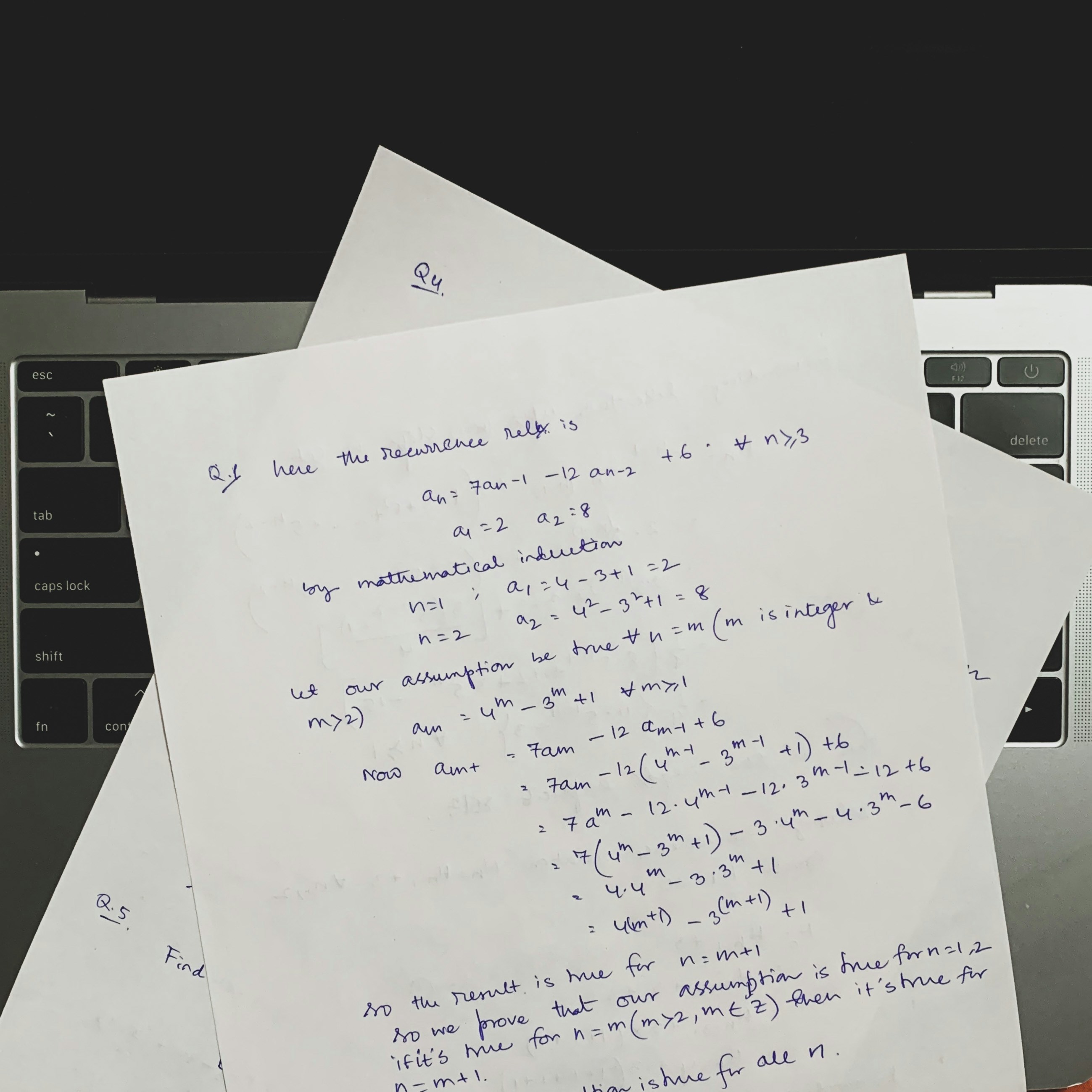
Learning numerical refers to the study of numerical analysis, a field focused on developing algorithms and methods to approximate solutions for complex mathematical problems. Often, these problems cannot be solved analytically, making numerical methods essential for practical applications.

Key Areas of Focus

Numerical learning encompasses several key topics and techniques. Error analysis is crucial, as it helps to assess the accuracy of numerical solutions. Numerical methods for solving systems of equations are foundational, providing techniques for tackling challenges in various domains. Additionally, interpolation plays a significant role in estimating values between discrete data points with high precision.

Applications in Various Fields

The applications of numerical learning are widespread, impacting several modern disciplines. In fields such as computer vision, numerical analysis techniques are employed to enhance image processing and recognition tasks. Similarly, in machine learning and data science, numerical methods are utilized to optimize algorithms and analyze large datasets efficiently. Understanding the fundamentals of numerical analysis thus equips individuals with vital skills applicable in both academic and industry settings.


Understanding Geometric Formulas: Shapes and Their Properties

Understanding Geometric Formulas: Shapes and Their Properties

Introduction to Geometric Formulas

Geometric formulas serve as fundamental tools in understanding and calculating the characteristics of various shapes. They not only help in defining dimensions but also provide insights into properties such as area and volume. This blog post will explore key geometric formulas commonly used for different shapes.

Formulas for Common Shapes

One of the most well-known geometric formulas is for the circle. The area (A) of a circle is calculated using the formula A = πr², where ‘r’ represents the radius. Additionally, the circumference (C) can be determined with the formula C = 2πr. This makes circles one of the simplest shapes to analyze geometrically.

For rectangles, the area can be easily computed using the formula A = l × w, where ‘l’ is the length and ‘w’ is the width. This straightforward formula allows for quick calculations, making rectangles a common shape in various applications.

Understanding Triangles and Right Triangles

The area of a triangle can be found with the formula A = ½bh, where ‘b’ is the base and ‘h’ is the height. Triangles can present more complexity when it comes to their properties compared to circles and rectangles.

A special triangle, the right triangle, utilizes the Pythagorean theorem: a² + b² = c². In this formula, ‘a’ and ‘b’ are the lengths of the legs, while ‘c’ denotes the length of the hypotenuse. This theorem is crucial for many applications in geometry, physics, and engineering.

Conclusion

Mastering these geometric formulas is essential for anyone looking to deepen their understanding of shapes and their properties. Whether for academic purposes or practical applications, these formulas provide a solid foundation for calculations involving area and volume.

Understanding Polynomial Identities: A Comprehensive Guide

Understanding Polynomial Identities: A Comprehensive Guide

Introduction to Polynomial Identities

Polynomial identities are fundamental concepts in algebra that illustrate relationships between polynomial expressions. They play a critical role in simplifying complex mathematical problems. This article focuses on two essential polynomial identities: (a + b)³ and (a + b + c)².

Exploring (a + b)³

The expansion of the polynomial identity (a + b)³ is given by the expression a³ + 3a²b + 3ab² + b³. This identity can be derived through the binomial theorem, which provides a systematic way to expand polynomial expressions. Each term in this expansion has significant implications in various fields, including physics and engineering, where polynomial relationships are often applied.

Examining (a + b + c)²

Another important polynomial identity is (a + b + c)², which expands to a² + b² + c² + 2ab + 2bc + 2ca. This identity emphasizes the relationships between three variables and illustrates how they interact in a squared polynomial form. Understanding this expansion is crucial for solving equations involving multiple variables and offers insight into the geometric interpretations of these relationships.

In summary, grasping the concepts behind polynomial identities like (a + b)³ and (a + b + c)² is essential for advancing in algebra. These identities not only simplify computations but also provide a deeper understanding of the interactions between variables.

Understanding Binomial Identities in Algebra

Understanding Binomial Identities in Algebra

Introduction to Binomial Identities

In algebra, binomial identities are expressions that utilize letters (variables) to encapsulate unknown quantities. By defining relationships among these variables, we can simplify problem-solving and enhance our understanding of mathematical concepts. In this post, we will delve into some fundamental binomial identities and their applications.

Key Binomial Identities Explained

Two important binomial identities to grasp are:

  • (a + b)² = a² + 2ab + b²
  • (a – b)² = a² – 2ab + b²

These formulas illustrate how squaring a binomial can result in a multi-term expression. They highlight the relationships between the coefficients and the variables involved, providing a deeper insight into algebraic manipulation.

Factoring Binomial Differences

Another essential identity worth noting is:

  • a² – b² = (a – b)(a + b)

This formula shows how the difference of two squares can be factored into a product of two binomials. Recognizing and applying this identity can simplify complex algebraic problems significantly, making it easier to solve for unknown variables.

In conclusion, mastering these binomial identities is crucial for anyone looking to strengthen their algebra skills. They not only establish relationships between variables but also provide a solid foundation for more advanced mathematical concepts.

Exploring the Longest River in the World

Exploring the Longest River in the World

Introduction to the World’s Longest River

The journey of rivers has always captivated the imagination of many. Among these waterways, the title of the longest river in the world has been a subject of debate. While numerous rivers snake through diverse landscapes, two main contenders often arise: the Amazon River and the Nile River.

Amazon vs. Nile: The Length Controversy

The Amazon River, flowing through South America, is renowned for its vast basin and biodiversity. Some studies suggest its length exceeds that of the Nile, reaching approximately 4,345 miles (7,062 kilometers) when measured from its most distant source to its mouth. The Nile, on the other hand, measures around 4,135 miles (6,853 kilometers) and is traditionally recognized as the longest river. This ongoing debate highlights the complexities of defining river lengths and their sources.

The Significance of the Longest River

The longest river in the world is more than just an impressive figure; it plays a crucial role in its ecosystem and the livelihoods of people living along its banks. The Amazon River is essential for local communities, serving as a transportation route and providing resources like fish and fresh water. Additionally, both the Amazon and the Nile support diverse flora and fauna, making them critical to environmental health.

Understanding these magnificent rivers enhances our appreciation for natural wonders. Whether or not you recognize the Amazon or the Nile as the longest river, their importance is undeniable, stretching far beyond mere measurements.

Exploring the 10 Largest Cities in California

Exploring the 10 Largest Cities in California

Introduction to California’s Largest Cities

California, known for its stunning landscapes and vibrant culture, is home to numerous large cities. Understanding the demographics and features of these urban centers provides insight into the state’s economy, culture, and lifestyle. Here, we explore the 10 largest cities in California, showcasing their unique characteristics.

1. Los Angeles

As the largest city in California, Los Angeles is a sprawling metropolis famous for its entertainment industry, including Hollywood. With a diverse population and a wide array of attractions from beaches to mountains, this city stands out as a cultural hub.

2. San Diego

San Diego, known for its pleasant climate and beautiful coastlines, ranks as the second-largest city in California. It is a prime destination for tourism, providing a blend of outdoor activities, restaurants, and vibrant neighborhoods.

3. San Jose

Third on the list, San Jose is the heart of Silicon Valley. This city is known for its tech industry, prosperous economy, and an array of cultural attractions, making it a leading urban center in California.

4. San Francisco

Famed for its iconic Golden Gate Bridge and vibrant arts scene, San Francisco ranks fourth in size. This city offers a blend of history and modernity, attracting millions of tourists each year.

5. Fresno

Located in Central California, Fresno is the fifth largest city and serves as an agricultural hub. Its proximity to national parks enhances its appeal to nature lovers and adventurers.

6. Sacramento

Sacramento, the state capital, comes in sixth. It boasts a rich history and political significance, contributing to California’s governance and public policies.

7. Long Beach

Long Beach follows, known for its waterfront attractions and vibrant arts scene. The city plays a key role in trade and shipping due to its bustling port.

8. Oakland

Ranked eighth, Oakland is a diverse city with a rich cultural heritage. It offers a mix of urban life and nature, with access to beautiful parks and waterways.

9. Bakersfield

Bakersfield, known for its oil production and agriculture, holds the ninth spot. The city has a rapidly growing economy and offers a variety of recreational activities.

10. Anaheim

Finally, Anaheim rounds out the list as the tenth largest city, famous for Disneyland Resort. This family-friendly destination attracts millions of visitors each year, contributing significantly to California’s tourism industry.

Exploring Asia’s Largest Dam: The Three Gorges Dam

Exploring Asia's Largest Dam: The Three Gorges Dam

Introduction to the Three Gorges Dam

The Three Gorges Dam, located on the Yangtze River in China, holds a prominent title in the realm of engineering marvels. When discussing the largest dam in Asia, the term can be subjective, relying on various metrics. However, when measured by installed capacity, the Three Gorges Dam stands unrivaled.

Capacity and Impact

With an installed capacity of 22,500 megawatts, the Three Gorges Dam not only symbolizes the power of modern engineering but also significantly contributes to renewable energy generation. This extraordinary capacity allows it to produce more electricity than any other dam in Asia, addressing the energy demands of millions.

Comparative Analysis with Other Dams

While the Three Gorges Dam leads in installed capacity, other notable dams like the Itaipu Dam in Brazil also claim substantial metrics, such as annual generation output. However, in terms of the sheer size and engineering complexity, the Three Gorges Dam remains a critical point of reference when looking at the largest dams in Asia.

In conclusion, the Three Gorges Dam’s status as the largest dam in Asia is primarily defined by its impressive installed capacity. Its contributions to electricity generation and flood control further enhance its importance on a regional and global scale.

Exploring the Biggest Wonders of the World

Exploring the Biggest Wonders of the World

The Tallest Building: Burj Khalifa

When we talk about the ‘biggest’ in the world, the Burj Khalifa in Dubai instantly springs to mind. Standing at an impressive 828 meters, it is the tallest building in the world. This architectural marvel not only boasts heights but also offers breathtaking views of the city from its observation deck on the 148th floor. A visit to the Burj Khalifa provides a unique perspective on human ingenuity and the desire to reach new heights.

The Largest Ocean: The Pacific

If we shift our focus from man-made structures to natural landmarks, the Pacific Ocean takes the title for the largest ocean, covering more than 63 million square miles. It is not only vast but also rich in biodiversity, hosting thousands of marine species. The Pacific offers various recreational activities, from surfing to diving, inviting adventurers to explore its depths.

The Largest Animal: The Blue Whale

Transitioning to the realm of wildlife, the blue whale reigns as the largest animal on the planet. These magnificent creatures can grow up to 100 feet long and weigh as much as 200 tons. Observing a blue whale in its natural habitat is a humbling experience that showcases the grandeur of the animal kingdom. Conservation efforts are crucial to protect these giants, reminding us of our responsibility toward preserving nature.

Unique Landmarks: The World’s Largest Ball of Twine

For those who appreciate quirky roadside attractions, the world’s largest ball of twine in Darwin, Minnesota, is a must-see. This whimsical monument, weighing over 17,000 pounds, symbolizes the charm of Americana and offers a light-hearted stop for travelers. It serves as a reminder that ‘big’ can also be found in the most unexpected places.

Exploring the Largest Dams Around the World

Exploring the Largest Dams Around the World

Introduction to Dams

Dams are critical engineering structures that serve multiple purposes, including water supply, flood control, irrigation, and hydroelectric power generation. Among the various dams constructed globally, some stand out due to their impressive size and capacity.

The Five Largest Dams

1. **Three Gorges Dam** (China) – Currently the largest dam in the world, the Three Gorges Dam on the Yangtze River has a total installed capacity of over 22,500 megawatts. This colossal structure not only generates electricity but also plays a significant role in flood control and river navigation.

2. **Itaipu Dam** (Brazil/Paraguay) – The Itaipu Dam ranks as the second-largest dam worldwide. It produces approximately 14,000 megawatts of power, meeting the energy demands of millions in both Brazil and Paraguay.

3. **Guri Dam** (Venezuela) – Known for its vast reservoir, the Guri Dam generates around 10,300 megawatts. It is a vital component of Venezuela’s hydroelectric power system, providing a substantial portion of the nation’s electricity.

4. **Kashiwazaki-Kariwa Nuclear Power Plant** (Japan) – While primarily a nuclear facility, the dam associated with this plant is noteworthy for its significant contribution to the grid, enhancing energy efficiency in the region.

5. **Xiluodu Dam** (China) – With an installed capacity of about 13,860 megawatts, the Xiluodu Dam is another top contender. It is crucial for energy production and water management in the upper Yangtze River basin.

Conclusion

These remarkable dams showcase human ingenuity and the ability to harness nature’s power. They not only supply energy but also improve flood safety and provide crucial water resources. Understanding the significance of these structures can enhance our appreciation for the engineering feats that support modern life.

Exploring the Three Gorges Dam: The World’s Largest Hydroelectric Power Station

Exploring the Three Gorges Dam: The World's Largest Hydroelectric Power Station

Introduction to the Three Gorges Dam

The Three Gorges Dam, located on the Yangtze River in China, stands as a monumental feat of engineering. It holds the title of the largest hydroelectric dam in the world, showcasing an impressive installed power generation capacity of 22,500 megawatts (MW). This massive project not only serves as a power generator but also plays a crucial role in flood control and river navigation.

Construction and Design

The construction of the Three Gorges Dam began in 1994 and concluded in 2012. This stunning structure spans approximately 2,335 meters in length and 185 meters in height. The dam features 32 main turbines and two smaller ones, contributing significantly to its capacity to generate electricity. The innovative design incorporates advanced technology, aimed at maximizing efficiency and minimizing environmental impact.

Impact and Significance

The implications of the Three Gorges Dam extend beyond just power generation. It has transformed the Yangtze River’s landscape and enhanced flood management strategies. By moderating water flow, the dam helps to mitigate the severe floods that plagued the region for centuries. Moreover, this engineering marvel has provided a substantial boost to local economies through the creation of jobs and the stimulation of various industries.